All too often, networking events feel like going to a bad singles’ mixer. There’s always that one guy racing around the venue, collecting contact info like it’s a contest. Or that one woman you just met who asks invasive premature questions about your work trying to decide if you’re the “one” (who can help her get a job). Or that one guy, who seems interesting at the event, but then calls you super early the next morning and wants you to commit (to buy his product) way, way too soon. And let’s not even talk about the people who stand too close or mention that their mom think they’re “such a catch” (and can’t understand why her baby doesn’t have a job!)
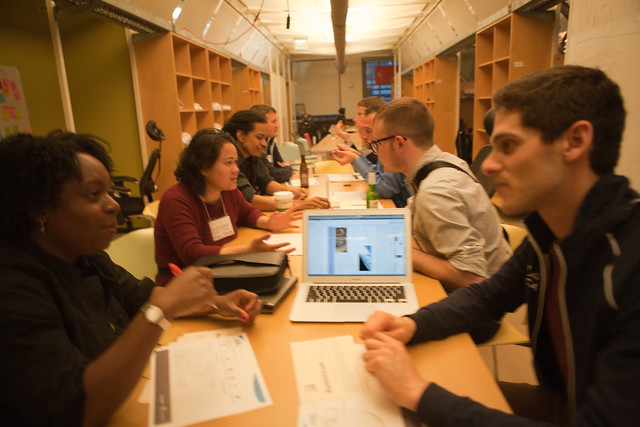 You go to these events, all dressed up and hopeful, and usually leave feeling disappointed because – despite all the schmoozing – you still aren’t sure that you’ve actually made a meaningful connection with someone who is in the field you want. Sometimes, you doubt that the people you want are even there – most networking events feel packed with job seekers on the prowl, and a smaller amount of job-havers (who are suspicious that networkers are only interested in them for the referrals they can make).
So, how do you network without feeling like you’re part of a meat market? Simple. Network like you should look for a significant other!
Savvy daters know that they make better connections with people who share similar interests. If they enjoy reading books, they’re more likely to meet someone compatible at a book reading than at a bar. Same for musicians, skiers, aspiring cooks, dog owners and lovers of classical music. If there’s something you want to enjoy doing with your significant other, it’s easier to find someone already interested in that activity than convincing the guy you met at the tequilla bar to try your (sober) hobby!
The same principles go for networking. Sadly in this world of online dating, there’s no Match.com for networking where you can filter out the things you don’t want (job hunting in your industry) and zero in on the things you do (happily employed at your dream company.)
In networking, you have to do it the old-fashioned way: by going to the places where the people you want to meet go.
If you’re interested in product development, look up interesting talks in your area about different stages in the product development cycle. If you’re interested in the healthcare field, find out where the people in your field go to have lunch and talk about news in their field. If there’s a big conference in your field, go out on a limb, buy your own ticket and go by your lonesome self. (Trust me, this impresses decision-makers at your target companies.)
Find learning events in the field you want to be in – and then throw yourself into them. Ask questions, do your research beforehand, and be as engaged as possible. If there’s a question-and-answer segment, make sure you ask a thought-provoking question. If the speaker asks for a volunteer, risk embarrassment and put yourself out there. Participate in those events like you’re there because you are really interested in the subject – not like you are there to network.
And then, on the side, do your networking. (But not like the typical networker!) Be friendly and try to meet as many people as possible. Engage them in conversation about the topic – not as a job seeker, but as someone who is genuinely interested. Then, when you go home, connect with them by sending them a link to an interesting article that builds off what you discussed at the event.
“Egads,” you’re probably thinking. “That sounds like a lot of work!”
It is. But it pays off.
Whenever you go to a singles/networking mixer looking just to meet that certain someone, you usually run into a lot of dead ends. But when you take the time to invest in building a friendly relationship with people who have similar interests, they stop worrying that you want too much too soon from them. Then they relax, engage in conversation, and look forward to getting to know you. And eventually, if you two aren’t right for each other, they introduce you to their friends – with a ringing endorsement thrown in.
And best of all, you get to go to events you actually enjoy, and connect with the people you’d want to meet anyways. Much better than running around a mixer collecting all the cards you can in the hopes that if you kiss enough frogs, eventually one will give you a job!
Author:
Katie Konrath blogs about creativity, innovation and “ideas so fresh… they should be slapped” at www.getfreshminds.com. She works for leading innovation company, Ideas To Go, and attributes her job to personal branding – both through her blog and by attending the events in her field.