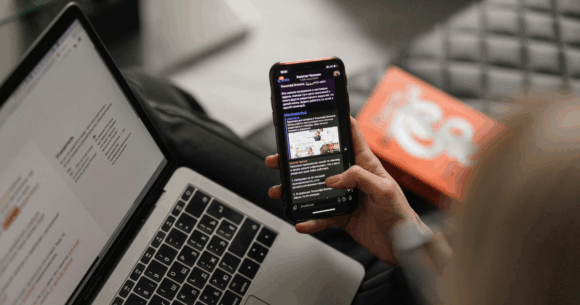
Why Brands Should Respond to Customers on Social Networks

Consumers expect companies to interact with them on social networks. Some companies see this as a hassle because they have to invest more resources to support their social media accounts, while others see it as a competitive advantage. Big-name companies like Zappos and Comcast have defined their customer services using Twitter. GoDaddy.com even uses the service to respond to customer complaints and questions.

When considering such customer service interactions, there are two factors to consider. The first is how responsive a company is to a consumer’s status update. If a company takes too long responding, then the customer feels like they don’t care and can probably solve the problem themself. The second is how helpful a response is. If the company responds and it’s not helpful, than the customer is unhappy.

To read the rest of this post, visit my branding column on American Express OPEN Forum.

Picture of Dan Schawbel

Dan Schawbel

Dan Schawbel is the Managing Partner of Millennial Branding, a Gen Y research and consulting firm. He is the New York Times and Wall Street Journal bestselling author of Promote Yourself: The New Rules For Career Success (St. Martin’s Press) and the #1 international bestselling book, Me 2.0: 4 Steps to Building Your Future (Kaplan Publishing), which combined have been translated into 15 languages.

TRENDING AROUND THE WEB

What a glass of wine at 8pm actually does for a writer — and what it doesn’t

What a glass of wine at 8pm actually does for a writer — and what it doesn’t

Global English Editing

Someone who skips the seasonal décor every year may not be indifferent to the holiday itself, they may simply be opting out of a display aimed more at whoever walks past than at anyone who actually lives there.

Someone who skips the seasonal décor every year may not be indifferent to the holiday itself, they may simply be opting out of a display aimed more at whoever walks past than at anyone who actually lives there.

Global English Editing

The Authenticity Costume: What Remains When You Stop Performing the Self That Refuses to Perform

The Authenticity Costume: What Remains When You Stop Performing the Self That Refuses to Perform

The Vessel

beehiiv’s 2026 benchmark data shows a median newsletter converts well under one percent of free subscribers into paying ones, while Substack still discloses no comparable conversion figures of its own, a transparency gap that creators researching where to launch a new paid newsletter are only now starting to take seriously

beehiiv’s 2026 benchmark data shows a median newsletter converts well under one percent of free subscribers into paying ones, while Substack still discloses no comparable conversion figures of its own, a transparency gap that creators researching where to launch a new paid newsletter are only now starting to take seriously

The Blog Herald

The Vigil: What the Night Wants to Teach You When Sleep Refuses to Come

The Vigil: What the Night Wants to Teach You When Sleep Refuses to Come

The Vessel

Greif and Gleason’s 1980 research on how children learn politeness routines found that young children almost never say “please” or “thank you” spontaneously, they say it because a parent prompts them with “what do you say?” dozens of times a week, meaning the reflex adults later display without thinking twice was built through years of someone else’s prompting long before it became automatic.

Greif and Gleason’s 1980 research on how children learn politeness routines found that young children almost never say “please” or “thank you” spontaneously, they say it because a parent prompts them with “what do you say?” dozens of times a week, meaning the reflex adults later display without thinking twice was built through years of someone else’s prompting long before it became automatic.

Global English Editing