The NEW Golden Rule

If you ask most anyone in serious networking circles what the Golden Rule of Networking is, they we reflectively respond, “Give First, Get Second.” While there is lots of truth in that answer, it is not the complete answer. It can’t be, as there is much more to successful networking than just giving.

Networking is about developing relationships with other people and then (while contributing to the lives of others) parlaying those relationships into things that benefit you …referrals … information … other contacts.

So the key to successful networking is getting lots of great people interested in you. This, however, almost begs the question, “How do I get people interested in me?”

How do I get people interested in me?
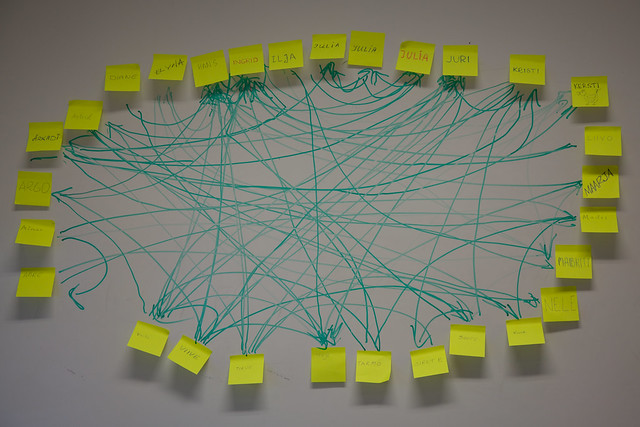
The best way to answer that is to ask yourself this, “Why do I want to network with certain people?” After all, it only makes sense that the reasons why you want to network with certain people are likely the same reasons why others would want to network with you.

With that simple revelation, it makes perfect sense that if you adopt the same characteristics, attitudes and habits of the people you want to network with, then others will want to network with you.

In very simple terms, you need to become the person you want to network with. This is the NEW Golden Rule of Networking.

Become the person you want to network with.

So, answer this: Who do you want to network with? In the most general of terms, you want to network with people that you know, like and trust. However, you need to drill down into more specific questions, such as …

• What do you want to KNOW about others?
• What makes you LIKE others?
• What builds your TRUST in others?

If you really think about it and work to uncover the answers to these three questions, then you have found out exactly why you want to network with other people.

More importantly, however, this exercise reveals to you exactly the person you need to become to get other people to want to network with you. Again, become the person you want to network with. To get at this, take a moment to examine each of these questions.

What do we want to KNOW about others?

What do we want to KNOW about others? For example, you cannot help but be impressed by the doers of the world, as those that go the extra mile for company, community or country always seem to have a following. Why not become one?

What other qualities in people do you admire? Sense of humor? Optimism? Courage? Endeavor to take those on. Become the person you want to network with.

What makes us LIKE others?

What makes us LIKE others? As with most people, you cannot help but like people who like you and as such you want to be around people who seem to take a liking to everyone. With that little nugget, you should find a reason to like everyone and do all you can to express it as genuinely as possible.

What other characteristics in people do you find attractive? Compassion? Thoughtfulness? Generosity? You should seek to adopt those mindsets. Become the person you want to network with.

What builds our TRUST in others?

What builds our TRUST in others? Admit it, you have a natural trust for the person who does what they say they are going to do. With that, you should become the person upon which others can rely.

What traits in other people make them trustworthy in your eyes? Conscientious? Honest? Open-Minded? You should try to mimic these behaviors. Become the person you want to network with.

Yes, giving to the world around you quietly inspires others to give that generosity back. If, however, you endeavor to mirror the characteristics, attitudes and habits of those you aspire to network with, legions of others will strive to network with you – giving you much more in the end.

Author:

Frank Agin is the founder and president of AmSpirit Business Connections. In addition, Frank is the author of Foundational Networking: Building Know, Like and Trust To Create A Lifetime of Extraordinary Success and the co-author of LinkedWorking: Generating Success on the World’s Largest Professional Networking Website and The Champion: Finding the Most Valuable Person in Your Network.

Picture of Frank Agin

Frank Agin

Frank Agin is the founder and president of AmSpirit Business Connections, an organization that empowers entrepreneurs, sales representatives and professionals to become more successful through professional networking and developing stronger business relationships. In addition, Frank is the author of Foundational Networking: Building Know, Like and Trust To Create A Lifetime of Extraordinary Success and the co-author of LinkedWorking: Generating Success on the World’s Largest Professional Networking Website and The Champion: Finding the Most Valuable Person in Your Network. He has also written dozens of articles and delivered hundreds of programs on achieving greater success through professional networking. All of his work and programs are an accumulation of his life experiences, observations and investigation as it relates to professional networking and business relationships. He is a graduate of Beloit College (Beloit, Wisconsin) and has a law degree and MBA from the Ohio State University. He lives near Columbus, Ohio with his wife and three children. To learn more about Frank Agin, go to www.frankagin.com. To contact him, you can e-mail him at frankagin@amspirit.com or connect with him through the following social media applications. LinkedIn: linkedin.com/in/frankagin Facebook: facebook.com/frankagin Twitter: @frankagin

TRENDING AROUND THE WEB

7 things adult children do when they visit their aging parents that look like love but are actually inspections — checking the fridge, scanning the counters, testing the smoke detector — and the parent always knows the difference

7 things adult children do when they visit their aging parents that look like love but are actually inspections — checking the fridge, scanning the counters, testing the smoke detector — and the parent always knows the difference

Global English Editing

Psychology says the most common wound among good mothers in later life isn’t resentment, it’s confusion — a genuine inability to understand how a relationship they poured everything into produced adult children who are kind but not curious, who visit but don’t linger, who love but don’t seek, and that confusion is harder to sit with than anger because at least anger has a target

Psychology says the most common wound among good mothers in later life isn’t resentment, it’s confusion — a genuine inability to understand how a relationship they poured everything into produced adult children who are kind but not curious, who visit but don’t linger, who love but don’t seek, and that confusion is harder to sit with than anger because at least anger has a target

Global English Editing

Japanese proverb: Fall seven times, stand up eight — psychology says people who embody this into their 50s and beyond develop these 9 resilience patterns that make delayed success not just possible but inevitable

Japanese proverb: Fall seven times, stand up eight — psychology says people who embody this into their 50s and beyond develop these 9 resilience patterns that make delayed success not just possible but inevitable

Global English Editing

I’m 65 and the question that keeps me awake isn’t “was I a good parent?” because I know I was — the question is “was I the right kind of good?” because there’s a version of good parenting that produces capable, independent adults who respect you enormously and call you on schedule and never once share the thing that’s actually breaking their heart, and I’m starting to think that version is the one I delivered

I’m 65 and the question that keeps me awake isn’t “was I a good parent?” because I know I was — the question is “was I the right kind of good?” because there’s a version of good parenting that produces capable, independent adults who respect you enormously and call you on schedule and never once share the thing that’s actually breaking their heart, and I’m starting to think that version is the one I delivered

Global English Editing

The children who finally stop shrinking themselves around their mothers almost always describe the same moment. It wasn’t a fight. It wasn’t a revelation. It was the quiet realization that they had been auditioning for approval from someone who had decided the part was already cast.

The children who finally stop shrinking themselves around their mothers almost always describe the same moment. It wasn’t a fight. It wasn’t a revelation. It was the quiet realization that they had been auditioning for approval from someone who had decided the part was already cast.

Global English Editing

I finally understand why I kept feeling lonely in my first marriage — I’d been showing up fully for a relationship where I was only partially welcome, and I’d convinced myself that was love

I finally understand why I kept feeling lonely in my first marriage — I’d been showing up fully for a relationship where I was only partially welcome, and I’d convinced myself that was love

Global English Editing