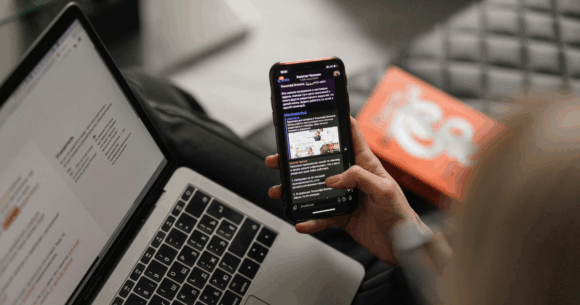
There’s no newspaper or magazine nowadays that does not devote some space to the fast-developing new phenomenon called social media. My explanation for this is very simple: Let’s say you invite some people for a social gathering to take place in your house. Among the dozen or so you host will be some who are very knowledgeable about certain subjects, and some others, less so. That doesn’t mean that those who aren’t very knowledgeable will not contribute to the conversation. They will, but their content will be less factual or less valuable to the listeners.
So, how does this situation apply to the electronic versions of social media? Today there are a significant number of such venues. The more popular are Twitter, Facebook, and LinkedIn (which is oriented more toward business contacts). People use them for communication in a similar way that those guests of yours do in your house. However, the interchanges happen electronically. Some of the written material is thorough, researched, meaningful, and at times useful. Other information simply amounts to chitchat that has no value except perhaps to a very few. The advantage of social media is that if you don’t like what you read, you can just move on to read something else. Conversely, when you’re faced with a similar situation in a physical venue, it would be rude to tell the speaker you’re bored and you’d prefer to move on.
If you’re in transition and looking for your next job, you’ll have to interact or network with people extensively. Not everything you hear people say will be valuable to you, but some of it will. Similarly, you have to be selective about your sources of reading material and their contents; it’s easy to be swept into meaningless and verbose articles at the end of which you realize you’ve gained nothing. On the other hand, once you learn to become selective and focus only on substantive reading material, you’ll realize you don’t have to reinvent the wheel, meaning that some other people can provide you the information you need.
Twitter, as an example, is limited to 140 characters. Some tweets are obvious wastes of time. The fact that John finished eating his muffin is irrelevant to most readers. But if someone draws your attention to a newly written article about a subject you’re trying to learn more about, that article could prove to be very valuable. The conclusion is that you need to eliminate the garbage found on social media and follow the selective few gems that will compensate you for your precious time.