Do you know how good it feels like the first time your blog gets a thousand visitors in a day? Neither do I…I’m just kidding.
The reality is that there is a very important lesson that you must learn if you want what you write to be read. It’s very simple – yet SO important:
There is no way that a stranger is going to read ANYTHING you write unless you begin with a truly awesome title.
Don’t believe me? Well, let’s look at an example… Let’s say you have just started building your personal brand and you want to promote a really interesting new piece you just wrote – oh let’s just say it’s about “how you watch grass grow”. You are going to use all that Dan Schawbel has taught you and market all over those botany related social sites that you are a member of.
So you log into your social networks and you share your article: “Watching Grass Grow.” And you hope people will click on it. A week later, you get a few visitors, but nothing significant.
Here’s what I, Sam Diener, would do: I would title my article: “It Grew a Whole Inch in Just Three Weeks – The Grass, I Mean.” Not to be cocky, but I guarantee you my article would get many more hits.
Note: Don’t title your article this way unless your personal brand allows it.
There are two marketing reasons that the title is so important. The first reason is that most search engines use the URL of the article to determine rankings. Wordpress and other blog software puts your title into the URL so a web page with “/networking-101/” in the URL will appear higher on the list on the search engine page than a web page with “/how-to-start-a-conversation/” when someone searches for the word “networking.”
The second reason the title is so important is because other than your article being recommended by someone else, the title is the only opportunity you have to draw others in. For example, if you Tweet your article, all you are going to share is the title and a link. If you don’t have a great title – your article is toast. Same thing goes for a discussion board or any other place you might advertise your content. Amongst thousands of other similar topics, you must grab your reader’s attention and have them say “this looks interesting.” It’s kind of like buying something off the shelf at the store…. you pick up the item with the best packaging, don’t you?
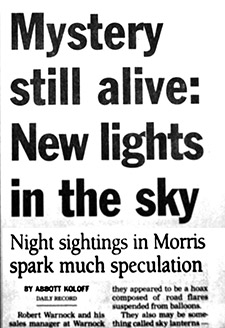
As I develop my brand, I continue to learn just how important my article titles are:
- My first article “Creative Networking for Your Job Search, 101” was read 500 times in the first week. It was a very ineffective title, but I literally shoved it down people’s throats.
- I titled my next article “Networking 101: You Had Better Get a Grip and Read This.” I “refined” my marketing tactics and I got 400 reads in one day. A little better.
- Then I learned my lesson on titling my articles. But taking big risks can have big gains. Members of the Executives group on Linked-In told me not to do this. But two recruiter friends told me to go for it, so I named my next article: “Networking 101: What Do You Mean it Only Lasted Ten Seconds!?” Yes, you all see the play on words with this title 900 reads in one day. And -everyone stayed and read my previous articles. That was the day I moved to the first page of Google for “Networking 101.” Not bad for a little innuendo.
- To reinforce my lesson, the next article I wrote, I originally titled it “Success 101: The Duchess of Howard County.” Nobody had ANY idea what I was talking about. I got 50 reads in one day. Abysmal.
So how do you pick the right titles for your articles?
Well, that depends on how you want to brand yourself. I like to be as creative as possible. You are striving for someone who doesn’t know they need to read your article, to want to go and actually read it. Develop your marketing plan and know your audience. I can’t exactly tell you how to be creative in your article titles – but I can give you some quick tips:
- According to Frederick Mann, the most powerful marketing words are: Amazing, Because, Easy, Free, How to, New, and Now. Use them, but don’t overuse them. Don’t get too cliché.
- Sometimes you can get away with hyperbole. For example, instead of “bad,” use “sucks,” or “horrible.” Instead of “good,” use “best in the whole world.” You would never tell someone face-to-face that their brand sucks, but “YOUR BRAND SUCKS…” Online isn’t that bad.
- Humor
- Use obvious sarcasm: “Personal Branding: Kanye West Is The Master of His Personal Brand!”
- In conversation, you generally want to stay away from anything race, sex, or politically related. Stay away from race. But hitting political or sexual innuendo with the right audience can be edgy enough to grab the eye of the reader.
Conclusions:
There are so many creative ways to title your articles. I’ve shared a few – but I look forward to reading your comments on other ones!
As you can see, maintaining creativity, while picking the right one to match your brand and audience can be a science. Get it right though, and traffic will follow!