Today, I spoke to Michael J. Berland, who is an internationally recognized strategic adviser and communications consultant, as well as the author of What Makes You Tick? How Successful People Do It — And What You Can Learn from Them. For his book, he interviewed people such as Heidi Klum, NBC’s Brian Williams, Christie Hefner of Playboy Magazine, Craig Newmark and more. In this interview, Michael goes over his book, how to discover what makes you tick, the main success archetypes, and some examples.
How do you discover what makes you tick?
You need to take some time to be introspective. What feels gratifying to you? It’s not about what others think about you but rather, what do you find really rewarding? Is it when you have an idea and you’re able to mobilize yourself and others to bring it to fruition? Is it when the end-goal is helping others? Is it when you’re able to jump on new projects or ideas and pursue them independently? Is it when you are able to stay big picture and inspire others? The answers to those questions help you figure out what success archetype you are.
How should you deal with things that make you tick?
The success archetype that I fit best from the five we identified in the book is “Independence Seeker,” which means I am fulfilled by pursuing varied interests and working with lots of different people, clients and projects over time. This works really well for me since I consult for clients from virtually every business category, from high-tech to Fortune 100 companies, to cosmetics companies to major sports teams and entertainment figures. I like to take chances to work on new things and I feel motivated and rewarded by recognition from the people I work with.
You say graduates should pursue what they’re passionate about. What if these things are very diverse? How do you know when to leave one pursuit and follow a different one?

There’s been a lot of great books written on trying to answer those questions, but our work comes at those questions a bit differently. To be sure, a lot of the people in the book tried different jobs on for size before finding what they ultimately led them to great success.
- NBC anchor Brian Williams told us he worked as a firefighter.
- Chef Bobby Flay very early on was a clerk on the floor of the American Stock Exchange.
- Craig Newmark who founded Craigslist said he thought about going into paleontology.
But our work is more about identifying what feels fulfilling based on your personality and finding your natural strengths in relation to other people. We encourage people to be introspective and try to identify what motivates you internally, what motivates you externally and the role you tend by nature to play in organizations so that you can pursue situations that will let you thrive and feel fulfilled.
Is there a common strength across all five of the success archetypes and how can you harness it?
“A common theme that most people defined very early on for themselves was that they knew they wanted to be successful.”
Again and again, they told us they realized it’s never about money or the title you have, but a passion they wanted to pursue or a world they wanted to be part of – fashion, sports, broadcasting, Broadway, business. And once they were in the world, they felt successful and fulfilled when they got to operate in a way that fit with their natural motivation traits and leadership style. Critically, because not everyone is motivated by the same thing, if you follow someone else’s motivation, you will never feel fulfilled. You have to define what’s going to feel worthwhile for yourself.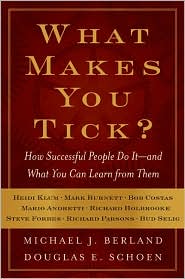
What are the so-called “success archetypes” you identified in your research?
There are four main ones:
- Visionaries see what others do not. These are the people that change our world, who see beyond the accepted models.
- Natural Born Leaders find their fulfillment in managing complex challenges on a national and global scale.
- Do-Gooders get their satisfaction comes from working for the greater good and helping other people. They are all about personal contact and connection.
- Independence Seekers want to live life on their own terms—to do what they want when they want. They are inspired and challenged by a specific project rather than a position.
——–
Michael J. Berland is an internationally recognized strategic advisor and communications consultant and an expert in how people think and behave as consumers, voters and decision-makers. As a partner in Penn, Schoen & Berland, the leading research-based strategic political and corporate communications company, he has led studies and campaigns for the world’s top brands, blue-chip companies, political candidates and entertainment clients in more than 80 countries on six continents. Michael’s book “What Makes You Tick? How Successful People Do It — And What You Can Learn from Them” (HarperBusiness, May 2009) is co-written with Doug Schoen. He has worked with the leaders of Coca-Cola, McDonald’s, and Procter & Gamble. His sports and entertainment clients include the NHL, MLB, NFL, and The Dixie Chicks. Michael’s TV appearances include CNBC, MSNBC, PBS’ “Wall $treet Week,” and “Your World with Neil Cavuto” on Fox News.