How to Stay Focused at Work

Every day you are sitting at your cubicle from 9am to 5pm and do you feel that you cannot get enough work done? Don’t worry! You are not alone. Many people complain that they are not productive enough during their workday. As a result, they work overtime in order to finish everything by the deadline. However, by doing small changes to your daily routine, you can increase your performance and use your time more effectively. Below are some useful tips which can help you stay more focused at work.

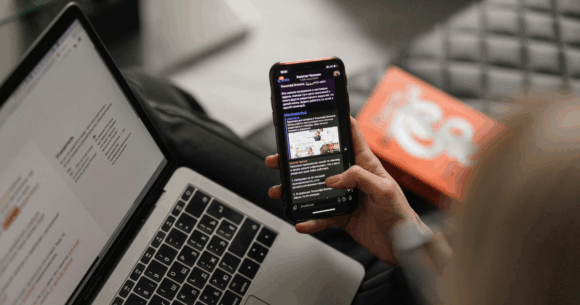
  • Stay Away from Social Media: You should discipline yourself not to check your social media sites every time when something pops-up. This includes checking them from your mobile phone as well. Even if you only want to scan your news feed, you will probably see something that interests you and as a result, you will stay in that social media site longer than you think. As a result, by the time you decide to get back to work, you will need some time to refocus on that work. Therefore, don’t waste your time and check your social media accounts only on your breaks.
  • Stop Checking Your Emails Randomly: The email message that pops-up on your computer screen can create urgency for many to check their inboxes constantly. Checking your emails frequently or the email pop-up on your computer screen can distract you. Unless you are truly waiting for an important email, you should schedule specific times to check your emails such as in the morning, after lunch or in the afternoon. The same holds for your smart phone messages and voicemails as well.
  • Make Sure Your Desk is Clean and Organized: It is difficult to concentrate when your desk is full of papers, folders and magazines. Therefore, you should have a storage system in place and archive your papers and files in shelves or in drawers. On your desk, you should only keep the items that you really need at that time. You can also keep some water and snacks to keep your stomach full and happy!
  • Take a Short Break Every Hour: According to a study by Gao (1990) and Floru and Cail (1987), performance starts to deteriorate after 50-60 minutes of continuous work. Therefore, taking a short 10 minute break every hour will help you clear your mind and prevent you from getting bored. As a result; after the break, you can continue your work with more performance and this increases your efficiency.
Picture of Ceren Cubukcu

Ceren Cubukcu

Ceren Cubukcu is a top 5 bestselling author of Make Your American Dream A Reality: How to Find a Job as an International Student in the United States. She recently founded her consulting business to help more international students find jobs in the US in addition to her self-service digital event ticketing platform, Etkinlik Fabrikam (My Event Factory), to offer her webinars. 

TRENDING AROUND THE WEB

The people most restless on phone calls often process meaning through the body first, and a voice-only conversation takes that ability away from them

The people most restless on phone calls often process meaning through the body first, and a voice-only conversation takes that ability away from them

Global English Editing

A generation raised without adults mediating their arguments learned to communicate directly, because no one was going to do it for them

A generation raised without adults mediating their arguments learned to communicate directly, because no one was going to do it for them

Global English Editing

People who become more attractive as they age rarely credit skincare — it’s the way certain faces soften once a person stops arguing with who they’ve become

People who become more attractive as they age rarely credit skincare — it’s the way certain faces soften once a person stops arguing with who they’ve become

The Vessel

The liking gap turned out to be largest specifically in the shyest people studied, meaning the people most convinced they weren’t liked were also the same people whose own self-criticism was distorting the read in the first place

The liking gap turned out to be largest specifically in the shyest people studied, meaning the people most convinced they weren’t liked were also the same people whose own self-criticism was distorting the read in the first place

The Blog Herald

Psychologists explain that the person who looks calm during every crisis often isn’t fearless — they learned early that their fear was an inconvenience to everyone else

Psychologists explain that the person who looks calm during every crisis often isn’t fearless — they learned early that their fear was an inconvenience to everyone else

The Vessel

Psychology says people who tolerate being talked over, dismissed, and quietly diminished usually don’t lack self-respect — they were taught that keeping the peace was their job

Psychology says people who tolerate being talked over, dismissed, and quietly diminished usually don’t lack self-respect — they were taught that keeping the peace was their job

The Vessel