

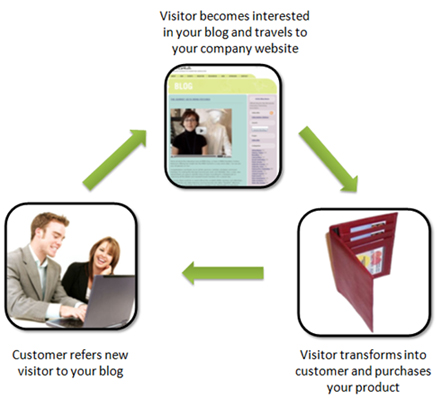
People from around the world are interested in a variety of subjects. They scour the internet, using google and technorati to search for these subjects in order to gain knowledge. Blogs have become the center resource for this knowledge, providing a first hand and personal feel that people can relate to. When visitors or perspective customers visit a blog, they can not only gain insight into a subject they are interested in already, but get a feel for the author who is writing it. There is no better way to start, grow and expand your business than creating a blog that is the interface to the customer. A blog acts as the middle-man between your business and the potential customer. It is a touch point by where visitors are converted to customers. Your Personal Brand allows for this connection to take place. By branding yourself as an expert in your field, readers are more likely to be interested in your writing, your brand and your corporate brand. Your goal is to be perceived as a major player on the subject that you deal with on your blog. There are 3 stages that will help you generate new business or retain customers, which I call “The Blog Conversion Cycle.” It all starts with writing a blog!
Stage 1: A visitor searches the internet and lands on your blog. They enjoy the material, as well as your subject matter expertise. They are an active participant in the blog by commenting or emailing the author. Once this connection takes place, there is a relationship and as we all know, that leads to new business opportunities. Remember that not everyone who visitors your blog will purchase your products or services or even subscribe. The percentage that hold interest are more inclined to travel to your corporate webpage afterward.
Stage 2: When a visitor has enough interest in your blog and perceives you as a leading service provider through your bio (could be LinkedIn), then they will be more likely to visit your corporate webpage or the page in your blog designated to product or service transactions. With a clear value proposition and marketing collateral to back it up, your business will be viewed as attractive to this customer. After learning about the topic, your business and your Personal Brand from your blog, visitors will be converted to customers that are ready to purchase.
Stage 3: As an expert providing a high quality product or service through your business webpage, you have now found an evangelist to spread awareness of your blog, business and Personal Brand to others. This may be done virally through the internet, physically through word of mouth or by links on other blogs or webpages. Either way, a happy customer is bound to speak about your business to others. Customers who refer others in their network to your blog are valuable assets to your company because they are your spokesman. Your customer can create new visitors to your blog, who will go through a similar cycle.
By using your Personal Brand through this cycle, you can expedite the results. I say this because the deeper the connection and relationship you have with visitors, the quicker they will be converted to customers. By blogging you are establishing that connection and through comments, email and other forms of communication, you are creating a bridge from your blog to your business.






