“What should I do? Should I admit that I’ve made mistakes? Should I remind you that I’ve done this before?” LeBron James says in this video.
I don’t think so. His leaving his hometown team in a flash of anger and attitude are still too fresh for us to need reminding. Underneath it all, I don’t see a remorseful LeBron in this ad, but rather a defiant one, still endorsing products and still making a fortune. Brilliantly written ad copy softens his edges a little, but he still has a bad boy brand.
Can you mess with your brand?
Does this brand actually help him in some strange way? As long as you’re not running a ticket agency in Cleveland, it probably does. He creates news because of his talent and his attitude, and we seem to love to follow famous-disasters-in-the-making. Think Michael Jackson, Lindsay Lohan, etc.
Can you afford to be casual with your brand, assuming that you can shoot off that angry email or tell your boss exactly what you’ve been thinking? Much more subtle, can you afford not to step forward for a key project at work or not take a leadership role with an influential outside group’s program? You already know the answer.
You spend a long time building the trust that people need to believe in your brand, not to mention the content of what your brand actually means. To hope that you can retract a “bad boy” action or flip-flop your beliefs and that people will stick with you, regardless, is optimistic. Think consistency. Consistency, competency, and kindness are what mere mortals need to build brands for success.
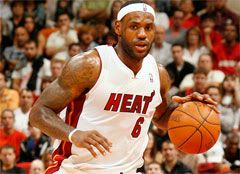 Which brings us to LeBron’s brand lesson #1:
#1. Only rock stars and hyper-athletes can get away with bad boy behavior (sometimes).
What if I want to change my brand?
Changing where you work, for example leaving your team when you’re a free agent, is fine. Happens all of the time. Changing your brand is a little more complex. It’s based on more than where you work or even what you do. You, as an individual with values, goals, ethics and standards, are part of your brand. LeBron challenged this by not delivering on what he had promised Cleveland (they’d win a championship) and how he left his team and his town.
“James chose to promote the drama of his decision in an hour-long television special instead of showing ‘common courtesy’ to notify Cleveland and other teams of his plans. Michael Jordan stated that he would not have contacted his rivals from other teams like Magic Johnson and Larry Bird to play on one team together, as ‘I wanted to defeat those guys.’” (per Wikipedia)
Which brings us to LeBron’s brand lesson #2:
#2. It’s not what he did. It’s how he did it. Your personal credibility is part of your brand.
Is this a tempest in a teapot?
It will be interesting to track how we’re feeling about LeBron James and his brand in a year or so. If he plays well and the Heat win some championships, will we forget about how he left Cleveland? Will we care? Refer back to lesson #1. Maybe his fame and uber-competence will cause this tempest to go away. After all, he was starting with a bad boy brand so doesn’t have to claw his way too far back up the ladder to reach the same level. Tiger Woods is going to have a tougher job.
We do have a clear national example of someone who rehabbed his brand over time: Ted Kennedy. One could argue that it might not have happened without Victoria Kennedy, but when he died, several of the major tragedies during his life never surfaced. Judging by the number of people that turned out to pay their respects, he had quite a following.
Which brings us to LeBron’s brand lesson #3:
#3. The pain may fade with time. (Mere mortals can’t wait that long.)
Regaining a credible brand takes a lot longer than keeping it from the get-go, so steady as we go. Modesty, credibility and consistency are all take-homes that LeBron has taught us with his anti-brand lessons.
As LeBron himself said:
“You try to continue to be blessed and take pride in what you do, the game of basketball, the centerfold of everything,” James said. “I’ll continue to get better. I’ll continue to win. Someday, I hope to bring championships to this franchise. And off the court, I want to keep inspiring kids. I don’t want them to be LeBron. I want them to be better than LeBron.”
As ball players, it’s going to be tough for kids to be better than LeBron. As future brand managers and caring adults, I’d say that they have a free throw.
Guest Author:
Pam Lassiter is author of the award winning The New Job Security and Principal of Lassiter Consulting, a career coaching firm doing outplacement or internal growth programs for companies or individuals.