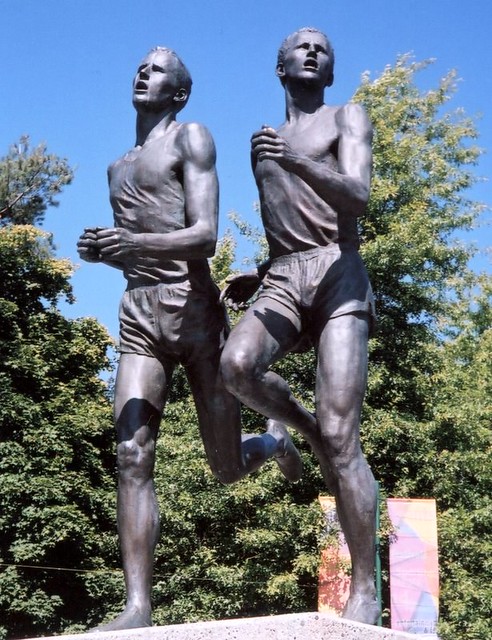
In 1954, 25 year-old British medical student, Roger Bannister, broke the four-minute mile. Up until that point, it was thought not possible that a human being could achieve such a feat. Within the year following this historic accomplishment, the four-minute mile threshold was broken sixteen more times.
What was the difference?
 Human beings are a bi-product of their belief system. When we think something is impossible, our expectations drop, as does our performance. We are capable of dramatically improving our results by upgrading our belief system. What does that mean? What got us here more than likely will not get us there if we continue down Interstate Impossible. It is incumbent upon us to listen to the little voice in the back of our heads imploring us to push forward when others say “you’re nuts”. In order for things to get better, you must be better. You will get “better” when you begin to believe that you are better. From basketball coaches to biologists, from philosophers to philanthropists and from mystics to medical professionals, they all acknowledge the raw power of thought in changing our performance.
Success has a price. Without some discomfort, sacrifice, stress, uncertainty and tension there is often a sandwich filled with status quo, mediocrity and stagnation. We must risk the short-term, uncomfortable feeling connected with exploring new avenues (thoughts) that will offer long-term gain and ultimate success. While getting dressed each day, be sure to grab your (emotional) bulletproof vest because you are going to take a few shots from people telling you that you are not “good enough”. Roger Bannister did not know any better and he shocked the world because no one told him that he could not. In the interim, do yourself a favor and purchase a small hand-mirror that you can carry around with you. When you begin to doubt your ability to be successful, take a hard look and remind yourself that you are capable. The magic happens on the other side when you continue to push forward. If it were easy, everyone would be doing it so stay focused, keep grinding and do not quit.
You can do it. You will become what you think about daily!
Author:
Devin C. Hughes, The Chief Inspiration Officer is a speaker, leadership coach, personal branding aficionado, and frequent eclectic thinker. He works with a variety of individuals and organizations, providing real-world strategies for real-world challenges. He draws on a variety of ideas, disciplines and trends to inspire “Big Thoughts” and facilitate conversations as a catalyst for meaningful personal and organizational change. He is a graduate of Colgate University; he lives in Southern California with his wife and four daughters. His website is http://www.devinchughes.com/ He is available upon request for consultation.