

I recently wrote a post on the Viralogy Blog focusing on how non-celebrities are using Facebook Fan pages as a way to reach out and stay connected to their community. Lets face it, not everyone uses Twitter, and Facebook provides another great platform to build a fan base and promote your great content.
I personally have yet to start a Fan Page for several reason: my biggest reason being I don’t want to personally create the Fan Page for “Jun Loayza.” I’d feel kind of weird creating a fan page centered around my name because I feel a “Fan Page” should be created by someone who is my fan. I wanted to find out why more people haven’t created their own fan pages, and I was very surprised at their answers.
The majority of people seem to think that creating a personal fan page is egotistical. Now, in this day and age where personal branding is the hot new craze, I assumed that people felt that “self-promotion” was now a long forgotten word and that “personal branding” has replaced it. So why can I start a “JunLoayza.com” and build my personal brand, yet if I create a “Jun Loayza Facebook Fan Page” I become egotistical?
This lead me to the question: when does personal branding become shameless self promotion?
Lets find out what the people have to say:
- @hollyhoffman – Somewhere around the time you flood my FeedReader & Twitter feed with every post you write, guest post or are mentioned in.
- @CarlosMic – When you say what or how good you are. That’s not your call.
- @JackiePeters – when you’re not offering anything, not bringing anything of value to the table, building a personal brand means contributing
- @genystartup – when a company has a dude sitting by his pc all day and half their tweets are begging ppl to follow them/try their product.#shame
- @AGOutLoud – shameless promotion occurs when you stop providing useful content and stop caring about your audience.
- @Joseph_Yi – I think it has to be a two-way street. When it becomes all about “me” no one will want to hear you out.
- @tonyruiz – When the person is all about “me” and not displaying value towards their followers.
- @dshanahan – PB is annoying when it is repetitive, out of context, or shallow. It’s always ‘self-promotion’ in one way or another.
It seems that the biggest factor separating personal branding from shameless self-promotion is value. If a person provides value with his content, then all the self-promotion is justified because people will benefit from the content. Is this true though?
The best example I can use is Guy Kawasaki. I met Guy a couple of months ago 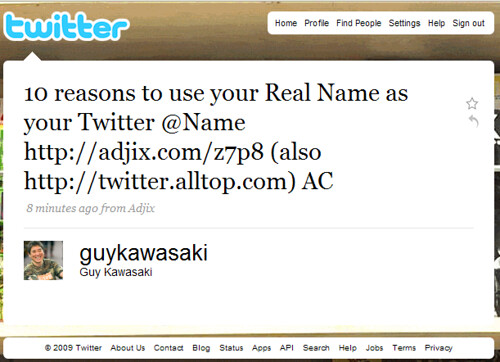 at a conference where I was speaking at. He’s an awesome guy, and taught me the term “UFM” – UnFollow Me. If you don’t like Guy’s Tweets, then you should unfollow him.
If you check out his Twitter stream, you’ll notice that all of his Tweets are to promote his company AllTop. For example, check out this link right here: http://om.ly/?BaRZ. It leads to a great article, but at the top in huge letter you see “AllTop.” I checked and all the links he Tweets out has this format. So I ask you, is this shameless self promotion?
Does the fact that Guy tweets out quality content justify this kind of self promotion? A lot of people would say “yes” because there are over 150,000 people following him on Twitter.
What do you think? When does personal branding become shameless self promotion?
Author:
Jun Loayza is the President of SocialMediaMarketing.com and the Co-Founder of Viralogy.com. Feel free to reach out to him to talk about entrepreneurship, fitness, and processes/systems. Find his contact at his personal blog.






