People make assumptions about who you are from their observations. They learn about your personal brand from what they hear and see. Your words, appearance, and actions combine to create a picture of who you are and what is important to you.
As Dan Schawbel recently commented on Facebook, “You get to decide what face you want to show to the world. It’s empowering and gratifying only if it’s authentic to you.“
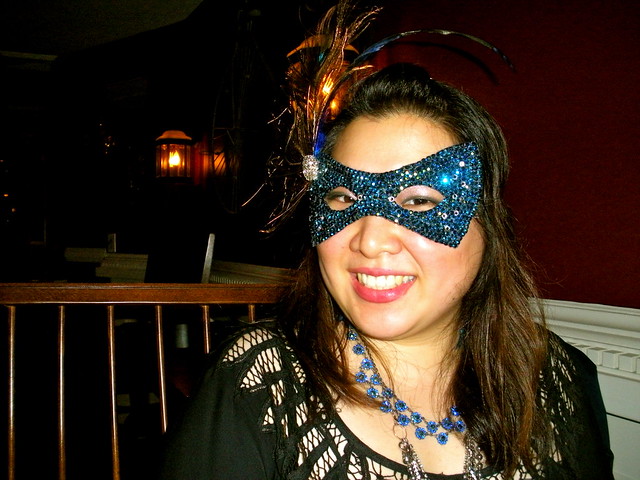 Although I agree with Dan, we also need to show different faces to the world at different times to adapt to our roles and situations. We don’t always act naturally.
Chameleon like attributes
Everyone changes his or her behaviors to meet challenges and circumstances. We have all had to bite our tongue, or wear clothes that are not totally comfortable, to make a certain impression. Our words and actions may not always be our first choice.
How many faces do you have and how well does your “true self” align with the faces you show the world? The interesting truth is that we present ourselves differently to different people. The way you act with your mother is usually not exactly the same way you act with friends or your boss. The language you use, way you dress, topics you discuss, and your actions all change as you play your roles.
Adaptation is a good thing
It can be fun, as well as necessary at times, to play with masks and disguises. We all do this. Each of us can be on our “best behavior” (whatever that might look like) and play a role to adapt and cope in this complex, ever changing world. It’s important to learn what to do and say to fit in. I’m sure everyone can give examples of how they learned to avoid certain behaviors and topics in specific situations. These adaptations are important if we want to interact successfully with a variety of people.
But you don’t want to confuse your adaptations with the “true you”. Define who you are by looking at the roles you need to play in your life. You may be a parent, child, sibling, employee, boss, friend, neighbor, lover, colleague, contributor, or competitor. Each persona, in various situations, may require different words and actions. Consider how you adapt and change using different behaviors, while underlying these behaviors is still the real you.
When I teach personality type concepts it is useful for me to match the language and demeanor of an individual to create rapport and facilitate learning. My intent is to help him or her learn and grow. Is this genuine? I believe it is; yet my choice of words and my reactions may be modified from how I naturally prefer to speak and act. This is an adaptation.
Finding the purpose behind the adaptation
Look carefully into your interactions to sort out the real you from your various personas. When are you most comfortable, most engaged, most energized? What are the threads that tie together your changing words and actions? For example, you may be at your best when you are focused on the moment, playing with ideas and possibilities, searching for reasons and explanations, connecting with others, knowing everything is going according to plan, or being flexible and spontaneous. These threads may show up across your adaptive behaviors.
By clarifying your motivations and interests across all of your roles, you’ll discover your core sense of purpose and enjoyment. This is the “authentic you” that, as Dan says, will be empowering and gratifying.
Author:
Donna Dunning, PhD, is a psychologist, certified teacher, member of the MBTI ® International Training Faculty, and director of Dunning Consulting Inc. She is the author of more than a dozen publications, including her two newest books, 10 Career Essentials and What’s Your Type of Career? 2nd edition. Donna’s guiding principle is: Know yourself, respect differences, learn and grow. Follow Donna on Twitter and Facebook and visit her website.