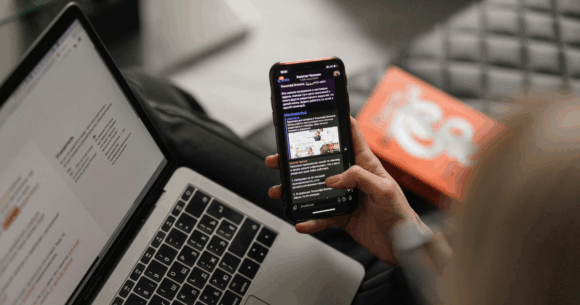
At coffeehouse in San Francisco with the whirring of a coffee grinder in the background, James Alexander- Founder of Vizibility, the company that helps you to take control and manage what people find about you on Google, spoke with me and generously shared some updates with his company. They’ve just launched their mobile friendly search results that ‘s easily printed as a QR code on a business card and instantly shares your top five Google Search results, contact information and links to many of your social media profiles. Access to the top five Google search results has always been a cornerstone of Vizibility’s service, yet the mobile friendly version just launched and couldn’t be more timely.
Alexander shared that currently 2,000 people have the same name as someone on the FBI’s 10 Most Wanted list. The onus is on us to be findable and associated with the right information.
With five times as many people using their SMART phones to access and search for information online, having a mobile version of Vizibility lends to the ease of being more visible –instantly!
Are you findable?
It’s important for each of us, according to Alexander:
1. To know what’s already out there online about us now
2. We Google everything. If we want to try it, buy it, meet it or date it, we Google it!
3. There’s no protection for our online reputation. While there are many guidelines as to the release of someone’s credit information, there is nothing that is protecting your from searches that are not really “you”.
So, what can you do to be represented in a fair and professional manner?
1. You cannot doctor search results (that’s why we love, trust and rely on Google so much when we’re first meeting someone).
2. You can influence Google through services (specifically Vizibility) which provides SEO friendly searches that create backlinks and push your chosen sites that represent you best higher and higher.
3. And, utilize a medium that provides the instant feedback, access and ability to store contact information the quickest – and that’s exactly what Vizibility mobile friendly now brings to the table.
Personal SEO
For job seekers, having accurate search results appear in a search for their name can be crucial to landing an opportunity. For business owners, whose personal brand often influences and directs the culture of the company, it can be the difference between securing the business. Vizibility, the world’s first SearchMe™ button for Google, helps individuals stand out and get found online by creating the most accurate personal search results in minutes.
To gauge the impact of using Vizibility, in Q1 of 2011, the company launched a pilot program of its Premier service with a leading professional services-based organization. More than 60% of employees participated by adding SearchMe links to their online profiles. The impact of adding Vizibility was significant. In the first three months of using the service, the average organic search results placement in Google was position 10 (bottom of the first page). Why is this important? According a study by Optify, ranking on the first page of search engine results is more important than ever.
Even more news: Vizibility has reached a significant milestone by surpassing one million clicks of its SearchMe links.
With the advent of their mobile user interface, you can be sure that I’ll provide more updates on Vizibility and how they address personal SEO and all elements, online and offline, that make up our reputation.