Tips for Working Comfortably at Your Desk

6 Ways Fear of Feedback is Holding You Back in Your Career

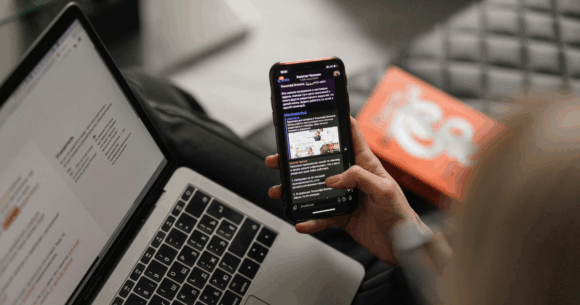
shutterstock_318062456It is important to feel comfortable at your office in order to increase your efficiency and protect your health. There are many small steps you can take to create a better work environment for yourself. You can start by implementing the below office ergonomics tips to improve your work day, care for yourself and decrease work related injuries.

  • Pick a Great Chair and Adjust it Right: You probably spend half of your time in the office at your desk chair. Therefore, choose a chair which will support your spine. Make sure the chair can be adjustable according to your height so you can put your feet on the ground. You can also use a cushion to support your back. If you are not happy with your current office chair, ask your manager if it can be replaced with a newer one. Don’t forget to include that this will reduce your back pain and as a result, it will improve your productivity. If you cannot get the approval, consider ordering your office chair yourself.
  • Set Your Monitor Appropriately: Your computer monitor should be directly at your eye level. Try raising your monitor level by placing a stand or some thick books under it. If your computer monitor is below your eye level, you need to keep bending your neck and shoulders. This can trigger neck and back pains in the future. On the other hand, if your monitor is above your eye level, you constantly need to look up and this puts unnecessary pressure on your neck.
  • Adjust the Light: An office needs to have lots of window to let natural sunlight in. If you cannot have natural day light in your office, at least use a softer light because it is much better than fluorescent lighting. The lamp should be placed overhead. In addition to that, a desk lamp can also be used for darker days.
  • Reduce Eye Strain by Taking Breaks: If you have to work on a computer more than 3-4 hours a day, you need to be careful about protecting your eyes. Try to blink often and look away from your monitor every half-an-hour. If possible, stand up and take a coffee break, talk with a coworker and ease your body posture. If you are very busy, at least look elsewhere for a minimum of 20 seconds.
Picture of Ceren Cubukcu

Ceren Cubukcu

Ceren Cubukcu is a top 5 bestselling author of Make Your American Dream A Reality: How to Find a Job as an International Student in the United States. She recently founded her consulting business to help more international students find jobs in the US in addition to her self-service digital event ticketing platform, Etkinlik Fabrikam (My Event Factory), to offer her webinars. 

TRENDING AROUND THE WEB

Someone who skips the seasonal décor every year may not be indifferent to the holiday itself, they may simply be opting out of a display aimed more at whoever walks past than at anyone who actually lives there.

Someone who skips the seasonal décor every year may not be indifferent to the holiday itself, they may simply be opting out of a display aimed more at whoever walks past than at anyone who actually lives there.

Global English Editing

The Authenticity Costume: What Remains When You Stop Performing the Self That Refuses to Perform

The Authenticity Costume: What Remains When You Stop Performing the Self That Refuses to Perform

The Vessel

beehiiv’s 2026 benchmark data shows a median newsletter converts well under one percent of free subscribers into paying ones, while Substack still discloses no comparable conversion figures of its own, a transparency gap that creators researching where to launch a new paid newsletter are only now starting to take seriously

beehiiv’s 2026 benchmark data shows a median newsletter converts well under one percent of free subscribers into paying ones, while Substack still discloses no comparable conversion figures of its own, a transparency gap that creators researching where to launch a new paid newsletter are only now starting to take seriously

The Blog Herald

The Vigil: What the Night Wants to Teach You When Sleep Refuses to Come

The Vigil: What the Night Wants to Teach You When Sleep Refuses to Come

The Vessel

Greif and Gleason’s 1980 research on how children learn politeness routines found that young children almost never say “please” or “thank you” spontaneously, they say it because a parent prompts them with “what do you say?” dozens of times a week, meaning the reflex adults later display without thinking twice was built through years of someone else’s prompting long before it became automatic.

Greif and Gleason’s 1980 research on how children learn politeness routines found that young children almost never say “please” or “thank you” spontaneously, they say it because a parent prompts them with “what do you say?” dozens of times a week, meaning the reflex adults later display without thinking twice was built through years of someone else’s prompting long before it became automatic.

Global English Editing

Still Performing for Ghosts: On the Masks We Keep Wearing for Tribes That No Longer Exist

Still Performing for Ghosts: On the Masks We Keep Wearing for Tribes That No Longer Exist

The Vessel