

Today, I spoke with Howard Gardner, who is a professor at Harvard Graduate School of Education, has authored over twenty books, and is best known for his theory of multiple intelligences. In this interview, we discussed Howard’s latest book called Five Minds for the Future. Howard goes over what the five minds are, an example of someone who has all of them, and how this impacts education and the recruitment of employees.
What are the five minds for the future? Which mind do you have?
Three of the minds are cognitive:
- Disciplined—mastering at least one area
- Synthesizing—being able to put ideas together in a coherent framework
- Creating—putting forth new ideas, practices, answers
The last two have to do with human relations:
- Respectful—giving others your attention and the benefit of the doubt
- Ethical—fulfilling the role of worker and citizen responsibly
I hope that I possess all of these minds to some extent; as a thinker, I have come to realize that I am basically a synthesizer.
Can you think of anyone who is a good example of all of these types of intelligence?
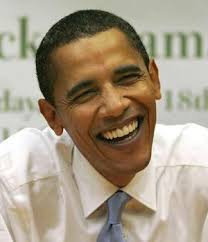
Even before he became President, I was convinced that in our world, Barack Obama comes as close as anyone to embodying the five minds. He is an accomplished lawyer, professor, and politician; he is able to put together ideas in an impressive intellectual tapestry; his campaign and life are marked by considerable originality. Most important, he seems genuinely to respect others and to attempt to behave ethically and to surround himself with others who are ethical.
How with your theory’s change how companies recruit talent?
In this century, the most important mind will be the synthesizing mind. We don’t yet know how to select for or nurture this kind of mind; but I expect that the capacity to synthesize will increasingly be at a premium.
To obtain short term success, we in the US have sacrificed the ethical mind in recent years. One of the possibly positive outcomes of the financial meltdown will be a heightened appreciation of how only ethical institutions and individuals will survive over the long haul.
How will educational institutions restructure due to these different minds?
As stated, once the importance of synthesizing is well appreciated, forward looking institutions will begin to train the process of synthesis. Disciplines will continue to be important. As machines carry out nearly everything that is routine, there will be a higher premium on nurturing creativity in human beings. In our increasingly globalized world, unless educational institutions cultivate respect and ethics, they will not survive.
Which mind has a better chance of career success and why?
Each of these minds is important, but respect and ethics are essential going forward. No one gets a ‘pass’ on these minds. But I think that there will be a division of labor among the first three cognitively-oriented minds. That is, some individuals will excel in mastering a discipline, some will be masterful synthesizers, and some will embody the creative spark. The skilled leader will make sure that all kinds and combinations of minds are represented in the organization.
——-
Howard Gardner is the John H. and Elisabeth A. Hobbs Professor of Cognition and Education at the Harvard Graduate School of Education. Among numerous honors, Gardner received a MacArthur Prize Fellowship in 1981. In 1990, he was the first American to receive the University of Louisville’s Grawemeyer Award in Education. He has received honorary degrees from twenty-two colleges and universities, including institutions in Chile, Ireland, Israel, and Italy. The author of over twenty books translated into twenty-seven languages, and several hundred articles, Gardner is best known in educational circles for his theory of multiple intelligences, a critique of the notion that there exists but a single human intelligence that can be assessed by standard psychometric instruments. Building on his studies of intelligence, Gardner has also authored Leading Minds, Changing Minds, Extraordinary Minds and his latest book, Five Minds for the Future.






