Houston … We Have A Problem

“Houston … We have a problem.”

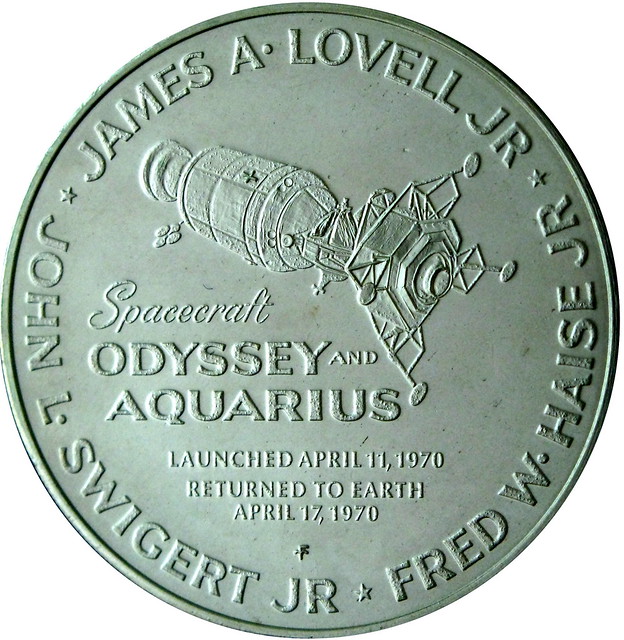
These famous or infamous words were said over three decades ago and close to a million miles away. On April 13th, 1970, James Lovell, commander of Apollo 13, uttered these words following an explosion in the ship’s oxygen tanks. His journey to the surface of the moon was over. His life was literally on the line.
What lay ahead was nothing but uncertainty. There was uncertainty with respect to what the obstacles were going to be. There was uncertainty as to whether or not those obstacles could be overcome. And, as you could imagine, he was thinking “am I going to make it?”

What Are Your Intentions?

Aboard Apollo 13, in the face of this adversity and uncertainty, Lovell turned to his crew and simply asked “Gentlemen, what are your intentions?” In so asking, he wanted to know if his shipmates were content with letting fate determine their destiny or whether they committed to controlling the course of their lives.

The crew of Apollo 13 responded. Commander Lovell, John Swigert, and Fred Haise sought to control the situation. Using ingenuity and relying on a network of thousands of NASA employees, contractors and governments from around the world, they guided the crippled Apollo 13 craft a million miles through space into a small re-entry window and successfully back to Mother Earth.

Bringing the lesson back to earth

So what does this have to do with you, your network and personal brand? Plenty. Although your situation is never anywhere near as dire as that of Apollo 13, nevertheless from time to time you face adversity. In short, your life has troubling times and your life has uncertain times – financially, physically and emotionally.

So this all begs one simple question, What Are Your Intentions?

Just as with the crew of Apollo 13, you should not allow fate or chance to determine your destiny or tarnish your brand. Rather you need to commit to control the course of your life by relying on your own ingenuity. But more importantly, just as the crew of Apollo 13 did, you need to tap into the network of people in your life. All of these people are ready, willing and able to assist you with genuine help, new connections and even simple encouragement.

If you do this, your network will flourish, your brand will grow in stature, and there is no doubt that you will have a safe landing whenever times in your life become seemingly out of control.

Author:

Frank Agin is the founder and president of AmSpirit Business Connections. In addition, Frank is the author of Foundational Networking: Building Know, Like and Trust To Create A Lifetime of Extraordinary Success and the co-author of LinkedWorking: Generating Success on the World’s Largest Professional Networking Website and The Champion: Finding the Most Valuable Person in Your Network.

Picture of Frank Agin

Frank Agin

Frank Agin is the founder and president of AmSpirit Business Connections, an organization that empowers entrepreneurs, sales representatives and professionals to become more successful through professional networking and developing stronger business relationships. In addition, Frank is the author of Foundational Networking: Building Know, Like and Trust To Create A Lifetime of Extraordinary Success and the co-author of LinkedWorking: Generating Success on the World’s Largest Professional Networking Website and The Champion: Finding the Most Valuable Person in Your Network. He has also written dozens of articles and delivered hundreds of programs on achieving greater success through professional networking. All of his work and programs are an accumulation of his life experiences, observations and investigation as it relates to professional networking and business relationships. He is a graduate of Beloit College (Beloit, Wisconsin) and has a law degree and MBA from the Ohio State University. He lives near Columbus, Ohio with his wife and three children. To learn more about Frank Agin, go to www.frankagin.com. To contact him, you can e-mail him at frankagin@amspirit.com or connect with him through the following social media applications. LinkedIn: linkedin.com/in/frankagin Facebook: facebook.com/frankagin Twitter: @frankagin

TRENDING AROUND THE WEB

The worry that you’ve left something at home is almost never about the thing. It’s about a mind that was trained to believe safety requires perfect attendance, that relaxation is just the space between mistakes, and that the moment you stop checking is the moment everything you’ve been holding together quietly comes undone

The worry that you’ve left something at home is almost never about the thing. It’s about a mind that was trained to believe safety requires perfect attendance, that relaxation is just the space between mistakes, and that the moment you stop checking is the moment everything you’ve been holding together quietly comes undone

Global English Editing

Psychology says the people carrying chronic unhappiness give themselves away not in complaints but in a set of habitual phrases so ordinary that neither they nor the people around them register them as distress signals—until someone points to the pattern

Psychology says the people carrying chronic unhappiness give themselves away not in complaints but in a set of habitual phrases so ordinary that neither they nor the people around them register them as distress signals—until someone points to the pattern

The Vessel

I’m 65 and I look and feel younger than I did at 55 and the honest explanation is that I said goodbye to three things in my late 50s—a friendship that had been a slow drain for a decade, a habit of catastrophising every night before sleep, and the belief that my worth was connected to how useful I was to everyone around me—and my face apparently had opinions about all three

I’m 65 and I look and feel younger than I did at 55 and the honest explanation is that I said goodbye to three things in my late 50s—a friendship that had been a slow drain for a decade, a habit of catastrophising every night before sleep, and the belief that my worth was connected to how useful I was to everyone around me—and my face apparently had opinions about all three

Global English Editing

Research suggests that people who need background noise to concentrate aren’t distracted – they’re using auditory input to regulate a nervous system that was trained in childhood to associate silence with unpredictability

Research suggests that people who need background noise to concentrate aren’t distracted – they’re using auditory input to regulate a nervous system that was trained in childhood to associate silence with unpredictability

Global English Editing

Most people assume the quiet person in the group has nothing to say. Psychologists explain that they’re often running a cost-benefit analysis on every potential contribution and have decided that the social cost of being misunderstood outweighs the reward of being heard

Most people assume the quiet person in the group has nothing to say. Psychologists explain that they’re often running a cost-benefit analysis on every potential contribution and have decided that the social cost of being misunderstood outweighs the reward of being heard

Global English Editing

I spent a decade trying to change myself into someone happier and the breakthrough came when I realized the version of me I was trying to build was just a more polished copy of someone else — and the person I actually needed to become was the one I’d been running from since I was nineteen

I spent a decade trying to change myself into someone happier and the breakthrough came when I realized the version of me I was trying to build was just a more polished copy of someone else — and the person I actually needed to become was the one I’d been running from since I was nineteen

Global English Editing